
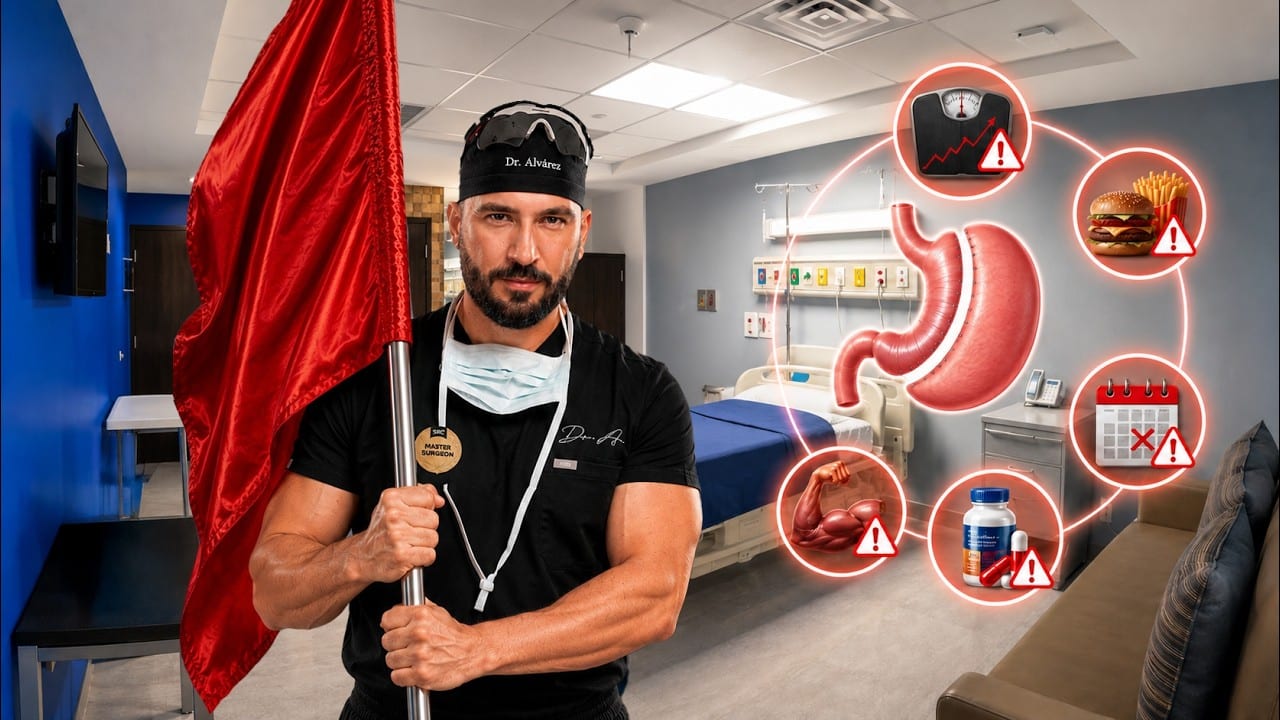
Have you ever wondered, “What if my gastric sleeve stops working?” This is a very common fear. But here’s the truth: in most cases, the surgery is not the problem.
Long before significant weight regain happens, your body and your daily habits usually start giving you warning signs. Small things begin to change. You snack a little more. Protein becomes less important. Exercise starts to slow down. Your follow-up appointments get pushed aside. Before you know it, the results are not where you hoped they would be.
I want to share five red flags that may keep your gastric sleeve from working as well as it should long term. Most importantly, what can you do about it?
Gastric sleeve surgery is one of the most effective treatments we have nowadays for obesity. But it is very important to understand this: surgery is a tool. Yes, it is a very powerful tool, but it’s not a guarantee.
The patients who do best long term are usually not perfect. They are not doing everything right every single day. But they recognize problems early. They pay attention, and when they notice they are drifting off track, they make small adjustments before those small problems become big ones.
So, let’s talk about five red flags you should not ignore after gastric sleeve surgery.
Red Flag #1: Grazing
The first red flag is grazing, and it is a big one.
Grazing means you are no longer eating structured meals. Instead, you’re eating small amounts throughout the day: a few crackers, a handful of chips, a bite here, a bite there, maybe a little something every time you walk through the kitchen.
Because each amount seems small, it may not feel like a big deal. But those small bites can add up very quickly.
The problem with grazing is that you may never feel truly hungry, but you may also never feel truly satisfied. You are constantly giving your body calories, but not necessarily giving it the nutrition it needs. Over time, that can make weight loss slower. It can lead to weight regain after gastric sleeve surgery.
Again, structured meals usually work much better than constant snacking. Your sleeve works best when you give it a meal focused on protein, eat slowly, and then stop.
So, if you notice that your day has turned into pretty much a long snack, that is a red flag.
Red Flag #2: Protein Is No Longer Your Priority
Sorry to tell you, the second red flag is forgetting about protein.
After gastric sleeve surgery, protein should still be the foundation of your meals. Not just during the first few months, not just during the weight loss phase, but long term.
Over time, some patients slowly move away from protein and start eating foods that are easier to tolerate, easier to snack on, or easier to grab quickly.
Usually, those foods are not protein. They’re crackers, chips, sweets, bread, pasta, and soft foods that go down very easily.
The problem is that when protein drops too low, several things can happen.
Number one, you may feel hungrier. You may also lose muscle. Your metabolism may slow down, and your body may burn fewer calories throughout the whole day.
Protein helps protect muscle, and muscle is very important for long-term weight maintenance.
That is why many successful long-term patients continue thinking “protein first,” not because protein is magic, but because it helps your sleeve work the way it was meant to work.
So, if protein is no longer the main part of your meals, that is a red flag.
Red Flag #3: You’ve Stopped Moving
The third red flag is a gradual decrease in activity.
And listen, this doesn’t mean you have to spend hours and hours, or a couple of hours, in the gym every day. That is not realistic for most people.
But movement matters. Walking matters. Strength training matters. Daily activity matters.
After gastric sleeve surgery, many patients become more active because they feel better, they move better, and they have more energy.
But then life happens. Work gets busy. Family gets busy. I get it. The routine changes, and little by little, movement disappears.
The problem is that when activity goes down, muscle can go down too. And when muscle goes down, your body burns fewer calories.
So, even if your eating has not changed dramatically, your results can begin to change.
Again, the goal is not perfection. The goal is consistency. A daily walk, some resistance training, taking the stairs, moving your body regularly—it all counts.
So, if you look back and realize you are moving much less than before, that is a red flag.
Red Flag #4: You Haven’t Followed Up With Your Bariatric Team
The fourth red flag is losing contact with your bariatric team.
This happens, unfortunately, all the time.
During the first year, patients usually attend their appointments, ask questions, do their lab work, and stay connected. But then, as time passes and life gets busy, follow-up visits become less frequent. Lab work gets delayed. Vitamins are also forgotten. Questions go unanswered, and small problems can begin to build quietly in the background.
Follow-up is not just about checking your weight. It’s about making sure your nutrition is where it needs to be. It’s about identifying deficiencies early. It’s about reviewing your habits. It’s about catching small issues before they become bigger problems.
Sometimes patients think, “Because I feel fine, I don’t need to follow up.”
But many nutritional deficiencies can develop slowly, and you may not notice them right away.
That is why staying connected with your bariatric team is so important. You do not have to do this alone.
So, if it has been a long time since you last followed up with your team or had your lab work done, that is a red flag.
Red Flag #5: You Expect the Surgery to Do All the Work
The fifth red flag may be the most important one, and that is expecting the surgery to do all the work forever.
Gastric sleeve surgery changes your stomach. It helps reduce your hunger. It helps you feel full sooner. It helps you eat smaller portions. And for many patients, it creates a powerful reset.
But the sleeve does not make every decision for you.
It does not choose your meals. It does not go grocery shopping for you. It does not prioritize protein. It does not make you take your vitamins. It does not make you exercise. It does not manage stress. And it does not prevent emotional eating.
Those choices are still yours.
And I say that not to blame you, but to empower you. Because once you understand that the sleeve is a tool, you can start using it correctly again.
The surgery opens the door, but you still have to walk through it.
The patients who maintain their results for years are usually the ones who understand this very clearly. They do not expect the surgery to do everything. They use the surgery as an opportunity to build a healthier lifestyle.
So, if you find yourself thinking the surgery should be doing more, but your habits have slowly changed, that is a red flag.
Recognizing the Red Flags and Getting Back on Track
Now, before we finish, I want to leave you with something important.
If you recognize one of these red flags, or even several of them, don’t be discouraged. This does not mean you failed. It does not mean your sleeve has stopped working, and it does not mean you cannot get back on track.
It simply means your body is giving you information, and that is a good thing, right? Because once you recognize the problem, you can start making the correct changes.
You can return to your structured meals. You can bring protein back to the center of the plate, and you can start moving again. You can schedule your follow-up appointment, and you can reconnect with the habits that helped you succeed in the first place.
Small adjustments made today can have a tremendous impact on your long-term results.
Remember, your gastric sleeve is still one of the most powerful tools available today for treating obesity. The key is learning how to work with it, not against it.
Ready to change your life? Click HERE to learn more about our $4,999 gastric sleeve special and start your journey today!