
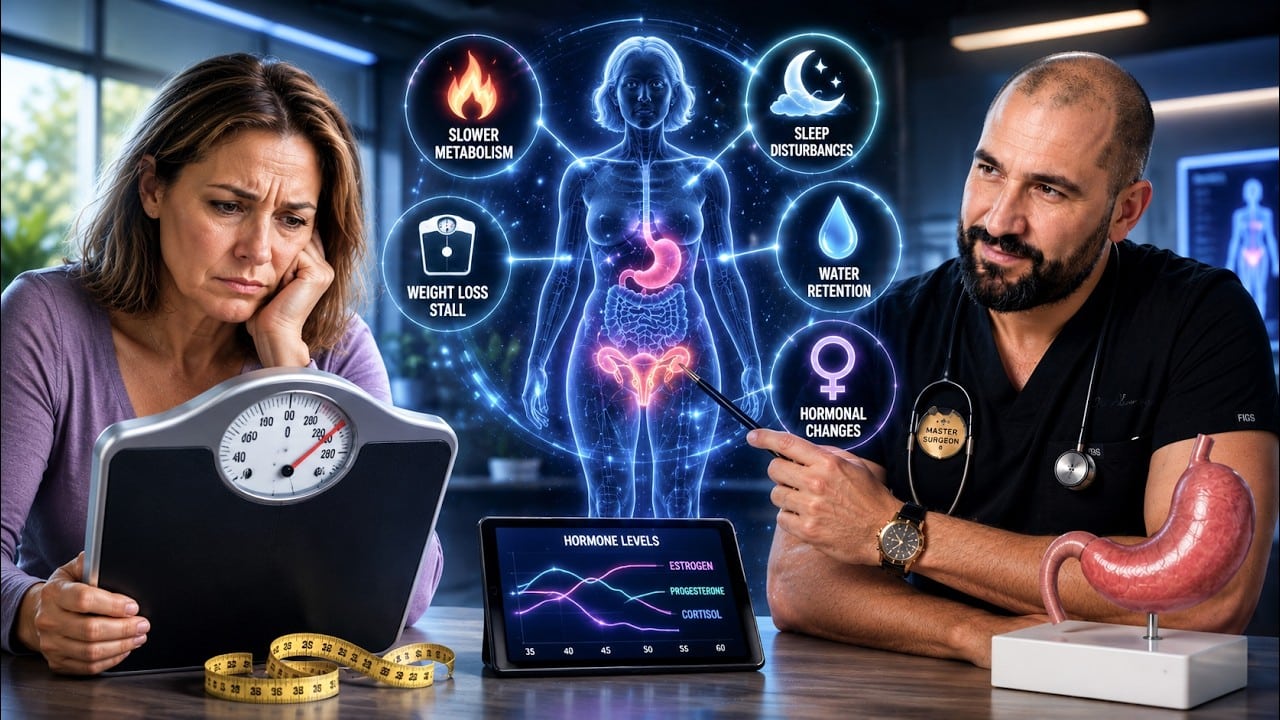
You had gastric sleeve surgery. You lost weight, and you were making progress. But now the scale isn’t moving like it used to. Suddenly, your energy feels different, your body feels different, and you’re wondering, “Why did my sleeve stop working?”
If you’re a woman in your 40s or 50s, perimenopause may be playing a bigger role than you realize.
One question I hear more often today comes from women who had successful gastric sleeve surgery years ago but suddenly feel that losing weight has become much harder.
In many cases, the sleeve isn’t the problem. The body is simply going through another major transition: perimenopause.
Let’s talk about why this happens and what you can do about it.
What Is Perimenopause?
Perimenopause is the period leading up to menopause. It can begin years before a woman has her final menstrual cycle.
During this time, hormone levels begin to fluctuate. Many women notice changes such as difficulty sleeping, fatigue, mood swings, hot flashes, increased hunger, and weight gain or, in this case, difficulty losing weight.
Because many of these symptoms overlap with everyday life, women often don’t realize that perimenopause may be contributing to what they’re experiencing.
Why Does Weight Loss Feel Different After Gastric Sleeve Surgery?
Many patients expect that once they’ve had gastric sleeve surgery, weight loss should always be easier. However, surgery doesn’t stop the natural aging process, and it doesn’t stop hormonal changes.
As women enter perimenopause, they may notice:
– Slower weight loss.
– Changes in body composition.
– Increased fat accumulation around the abdomen.
– Changes in appetite.
– Reduced energy.
All of this doesn’t necessarily mean that the surgery has failed. It means your body is changing, and your strategy may need to change as well.
The Hidden Factor: Muscle Loss
One of the biggest challenges during perimenopause is the gradual loss of muscle mass. This is especially important after bariatric surgery.
Why? Because muscle helps support strength, mobility, energy levels, and metabolism.
Many women focus only on the scale, but maintaining muscle may be just as important as losing weight.
In some cases, patients aren’t actually gaining much fat. They’re losing muscle and seeing changes in their body composition.
What Can You Do About It?
The good news is that there are things you can do to address these changes.
1. Prioritize Protein
Protein becomes incredibly important for maintaining muscle mass.
2. Stay Active
Walking is great, but resistance training may be especially valuable during this stage of life.
3. Focus on Sleep
Poor sleep can affect hunger, energy, and overall well-being.
4. Maintain Regular Follow-Up With Your Healthcare Team
Sometimes, lab work, nutritional deficiencies, or other medical factors may also contribute to what you’re currently experiencing.
Has Your Gastric Sleeve Stopped Working?
This is perhaps the most important message: perimenopause does not mean your sleeve has stopped working. It does not mean you have failed.
Your body is simply entering a new phase.
The patients who do best long-term are often those who recognize these changes early and adapt their habits accordingly.
The goal isn’t to fight your body. Your goal is to work with it.
Understanding Perimenopause and Long-Term Health After Gastric Sleeve
Gastric sleeve surgery remains a powerful tool, but every stage of life brings new challenges.
Understanding how perimenopause affects your body can help you make better decisions and stay focused on long-term health.
If you had gastric sleeve surgery and you’re going through perimenopause, what’s been your biggest challenge? Is it your energy, sleep, weight regain, or changes in your body composition?
Ready to change your life? Click HERE to learn more about our $4,999 gastric sleeve special and start your journey today!